Learn about precious metals
Precious metals glossary
What does fineness mean, how does spot pricing work and how can you recognise real silver? Our glossary explains the key terms relating to gold and silver buying, clearly and honestly, just as we advise customers at our Nordhorn shop.
Before you sell, our two guides help: what to look for when selling gold and what matters when selling silver.
Where is the best place to sell my gold?
Recognise reputable buyers and compare bank, jeweller, online buyers and local buyers.
Read the guide
What does my hallmark mean?
Understand 585, 750 or 925 and the material value.
Understand hallmarks
What is my gold worth today?
Gold, silver, platinum and palladium per gram, at today's price.
Current old gold pricesPrices and selling by material
The glossary explains what a term means. What your piece is worth today is shown on our buying pages with the current price.
Gold
Silver
Platinum and palladium
26 terms to explore
Fineness and alloys
What 333, 585, 750 and 925 mean, how carat is converted and why gold colour does not change its value.
Fineness
Fineness indicates how much pure precious metal an alloy contains, expressed in parts per thousand.
Clearly explainedCarat
Carat is the English-speaking world's measure of gold content, with 24 carat corresponding to pure gold.
Clearly explained333 gold (8 carat)
333 gold consists of one-third pure gold and is the lowest commonly used gold alloy in Germany.
Clearly explained375 gold (9 carat)
375 gold consists of 37.5 per cent pure gold, which is 9 carat, and is common above all in jewellery from Great Britain.
Clearly explained585 gold (14 carat)
585 gold contains 58.5% pure gold and is the most popular gold alloy for jewellery in Germany.
Clearly explained750 gold (18 carat)
750 gold contains 75% pure gold and is regarded as a high-quality alloy for fine jewellery.
Clearly explained999 gold (24 carat)
999 gold is fine gold with a gold content of 99.9 per cent, which is 24 carat, and the fineness of investment bars and many gold coins.
Clearly explainedWhite, red or rose gold · explained
White, red and rose gold are gold alloys that differ only in their additional metals, not their fineness.
Clearly explainedAlloy
An alloy is a mixture of a precious metal and other metals, affecting hardness, colour and value.
Clearly explained925 sterling silver
Sterling silver consists of 92.5% pure silver and is the standard for high-quality silver jewellery.
Clearly explainedCoins and bars
Troy ounces, bullion coins and minted investment gold: the terminology used to trade bars and coins.
Testing and valuation
Read hallmarks, recognise plating, measure fineness and understand weight before discussing money.
Hallmark (stamp)
A hallmark is a stamped mark indicating a precious metal item's fineness and often its maker.
Clearly explainedHow to tell real gold
Hallmarks, magnets and home remedies only hint at whether jewellery is real gold; certainty comes only from a professional test.
Read the full guideGold-plated or solid
Gold- and silver-plated items have only a thin precious metal coating and therefore little material value.
Clearly explainedX-ray fluorescence analysis
X-ray fluorescence analysis determines a precious metal's fineness non-destructively in seconds.
Clearly explainedFine metal weight
Fine weight is the amount of pure precious metal in an item; gross weight is everything on the scale.
Clearly explainedPrices and taxes
Spot price, buying rate and the tax rules that apply to private precious metal sales in Germany.
Spot price (daily price)
The spot price is the current market price for a precious metal and the basis of every fair buying price.
Clearly explainedBuying rate
The buying rate is the percentage of spot price you actually receive when selling.
Clearly explainedTax holding period
After one year of ownership, gains from a private gold sale are tax-free in Germany.
Clearly explainedInvestment gold
Investment gold is exempt from VAT in Germany, unlike silver and platinum.
Clearly explainedSelling in practice
From scrap gold in a drawer to the payout: what to bring and what happens to the material afterwards.
Scrap gold
Scrap gold is broken or incomplete gold jewellery bought solely for its material value.
Clearly explainedSilver tableware
Silver tableware includes solid silver cutlery and dishes, bought according to weight and fineness.
Clearly explainedID requirement
When buying precious metals, Germany's Anti-Money Laundering Act only requires valid ID for cash payments of 2,000 euros or more.
Clearly explainedScheideanstalt (precious metal refinery)
A Scheideanstalt is a refinery that separates precious metals from old gold and alloys to recover pure material.
Clearly explainedSelling gold: what to look for
How to recognise a reputable gold buyer, and how banks, jewellers, online buyers, refineries and local buyers compare.
Read the full guideSelling silver: what to look for
When selling silver, hallmark, weight and quantity count: how to sort cutlery, coins and bars and where selling pays off.
Read the full guide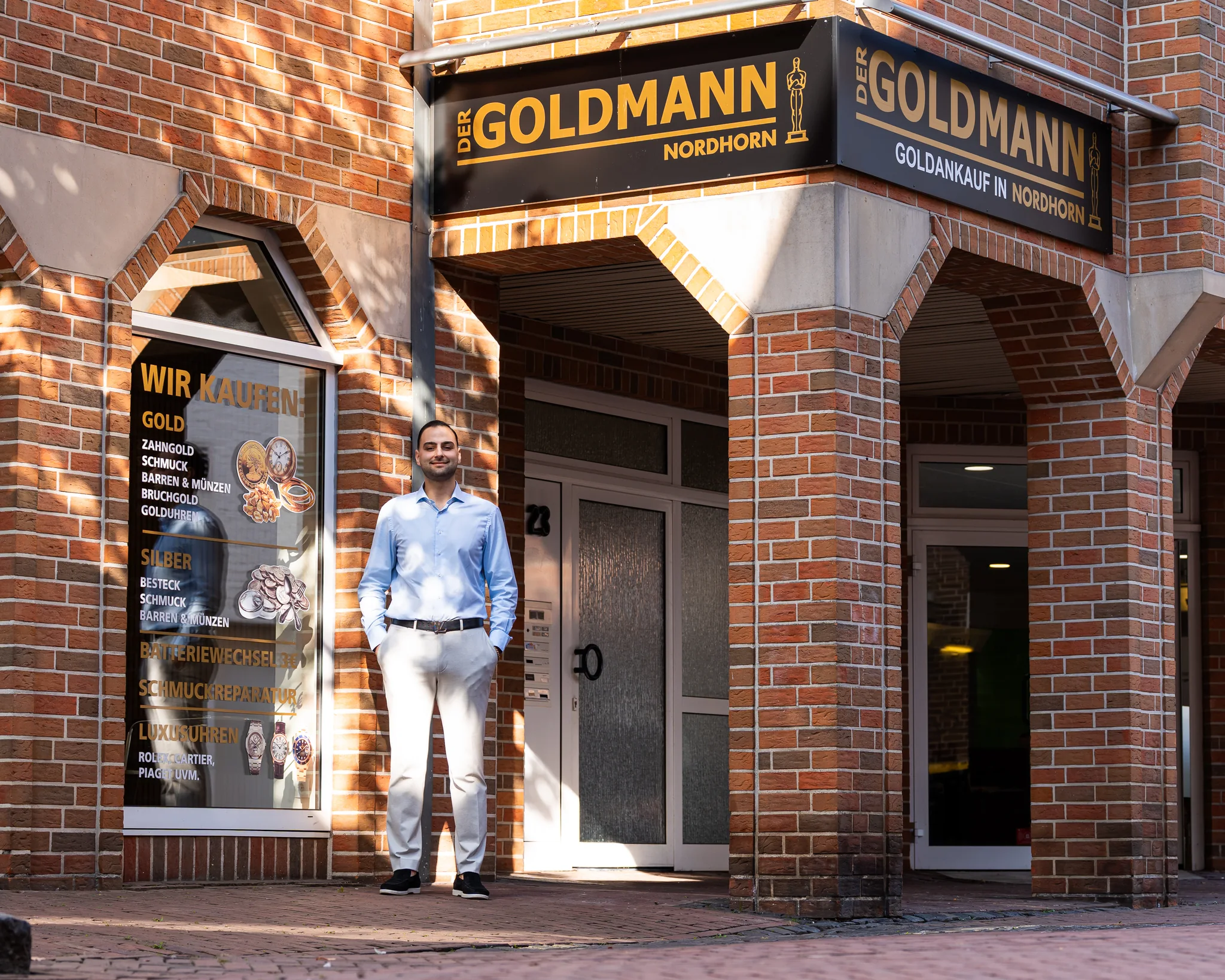
Sell gold now in Nordhorn
Discreet, fair and without obligation. Calculate your price, send an enquiry and we will call you back. You can also visit at any time without an appointment.
5.0 out of 5 stars on Google · 110 reviews