
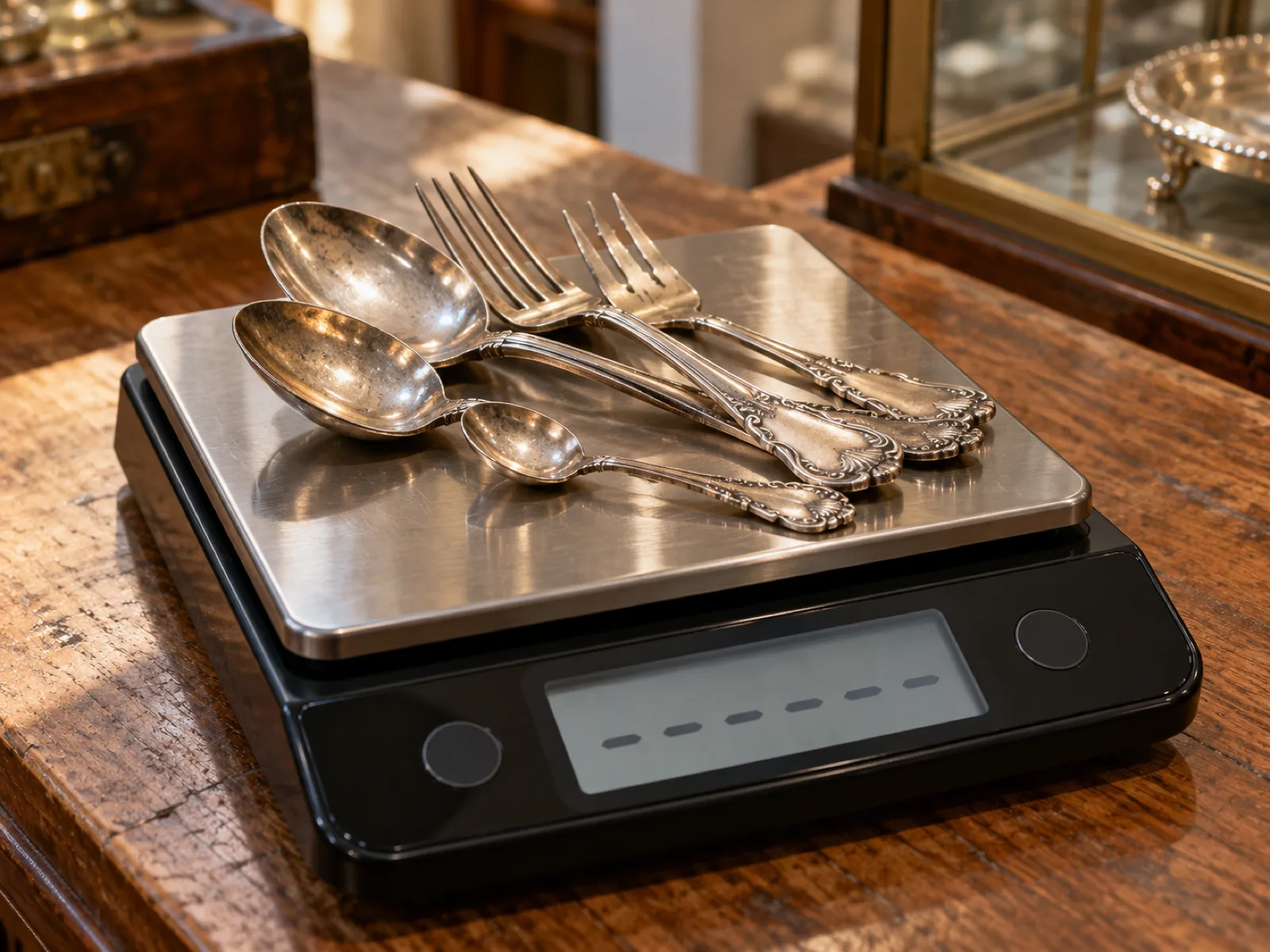
The 90 on cutlery: solid or plated?
The most common misconception concerns the number 90. It is a plating designation, not fineness: around 90 grams of silver were electroplated onto 24 pieces. This plated cutlery, including 100 plating, has only a thin coating and therefore almost no material value.
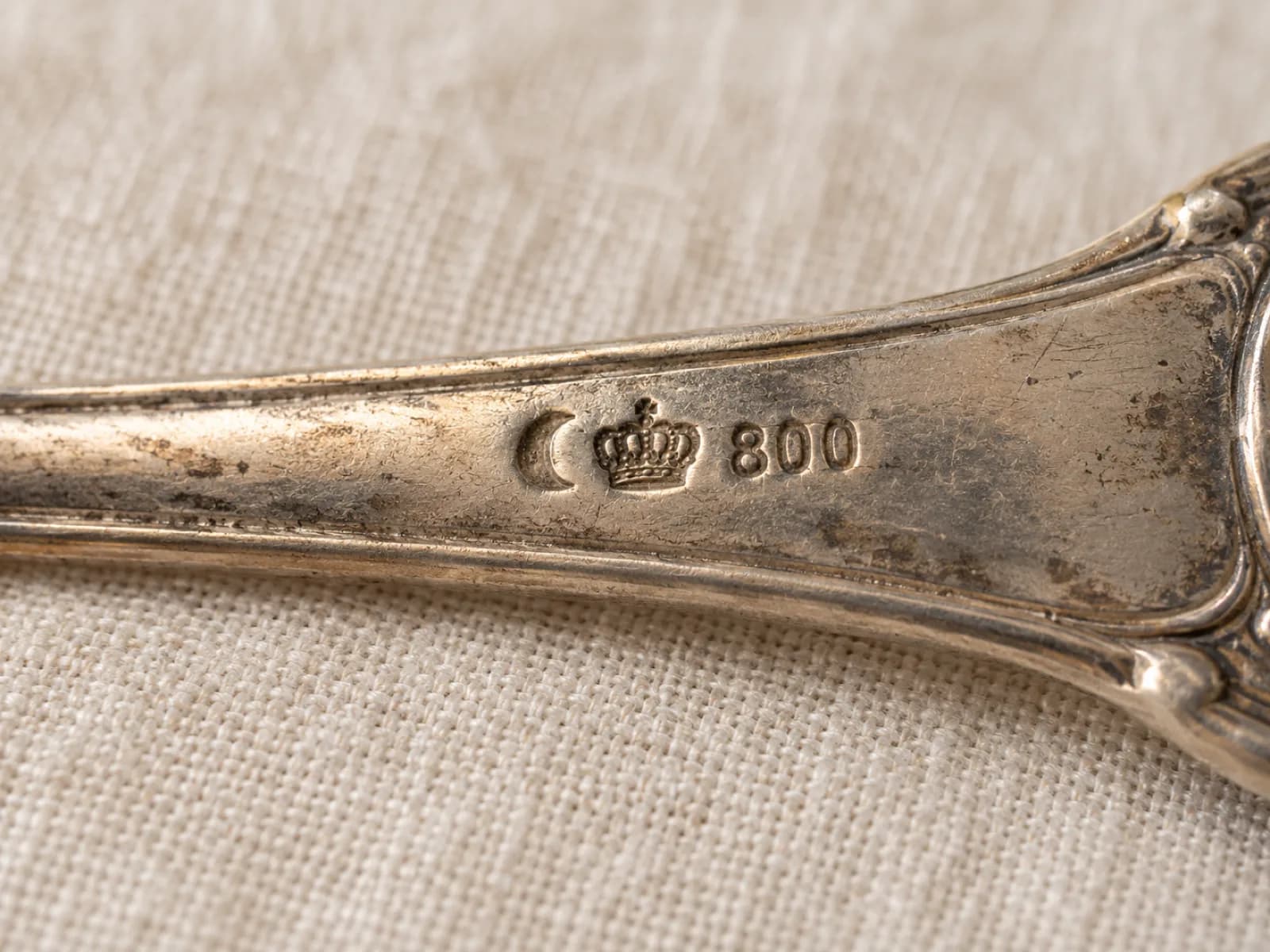
You can recognise solid silver cutlery by fineness marks such as 800, 835 or 925, often accompanied by a crescent and crown. Only this solid silver has genuine buying value. Read more in the glossary entry on Silver tableware.
| Hallmark | Meaning | What we pay |
|---|---|---|
| 800 with crescent and crown | Solid, 80 % silver. The crescent and crown mark German work made after 1888. | By weight, 85 % of material value |
| 835 | Solid, 83.5 % silver, common on older German silverware. | By weight, 85 % of material value |
| 925 (sterling) | Solid, 92.5 % silver. | By weight, 85 % of material value |
| 90 | Silver-plated: 90 g of fine silver across 24 pieces, about 3.75 g per large piece. | Usually no buying value |
| 100 | Silver-plated: 100 g of fine silver across 24 pieces, about 4.2 g per large piece. | Usually no buying value |
The difference in figures: a solid tablespoon in 800 silver contains about 32 to 56 grams of fine silver, a plated one marked 90 or 100 only about 3.75 to 4.2 grams. That thin layer can hardly be recovered economically.