Glossary
Scheideanstalt (precious metal refinery)
A Scheideanstalt is a refinery that separates precious metals from old gold and alloys to recover pure material.
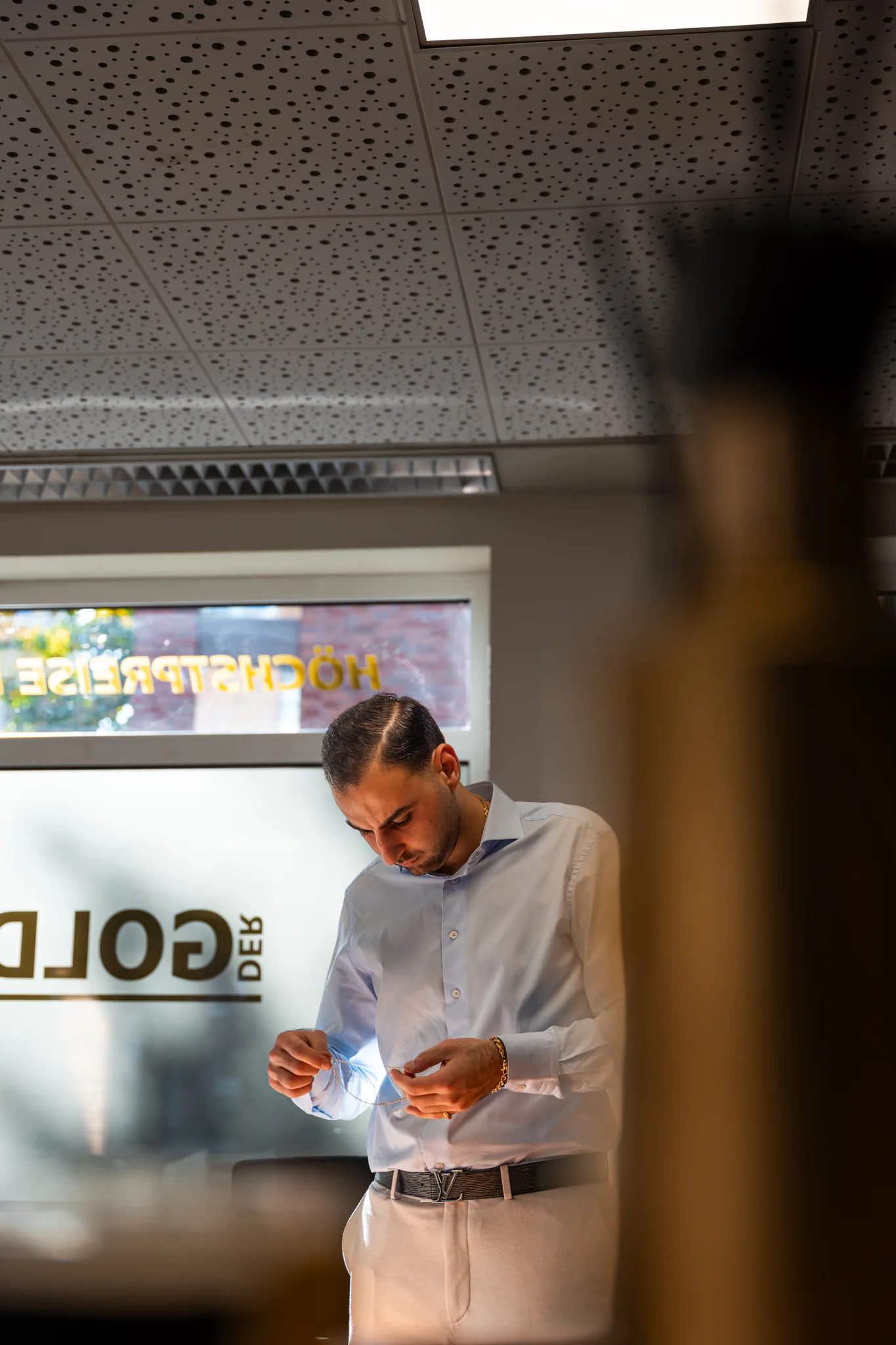
A Scheideanstalt, a precious metal refinery, recovers pure precious metals from old gold, jewellery, dental material and industrial scrap. What a gold buyer takes in usually ends up there too.
What does a precious metal refinery do?
It melts down material containing precious metals, determines by analysis how much gold, silver, platinum and palladium it holds, and separates these metals from one another and from copper, zinc or nickel. The result is pure precious metal that returns to jewellery making, dental technology and industry as bars, grain or semi-finished products.
The two classic methods are aqua regia, in which gold is dissolved in an acid mixture and precipitated again, and the Wohlwill electrolysis process, which can achieve 999.9 fineness. Both involve considerable work, one reason the jewellery buying rate is lower than the bar rate.
Recycled precious metal meets a significant share of global demand. Every gram returned from a drawer to circulation replaces newly mined material. For sellers, this means that even broken and mixed items retain their full material value.
Refinery or local gold buyer: the difference
If you sell gold to a refinery, you hand in your material and are usually paid for the measured precious metal content, minus the refinery's costs. A local gold buyer, by contrast, tells you a fixed share of the material value before you agree and bears the analysis, transport and refining itself. Der Goldmann Nordhorn is not a refinery but a gold buyer; the table sets the two routes side by side.
| Criterion | Scheideanstalt (precious metal refinery) | At our shop in Nordhorn |
|---|---|---|
| Payout | Often only after melting and analysis; each refinery decides when it pays. | Immediately once you agree, in cash or by bank transfer. |
| Minimum lot | Depending on the refinery, there are minimum lots or a minimum fee. | None, even a single earring. |
| Costs | Refining and assay costs are deducted from the proceeds; the amount depends on the refinery and the quantity. | No fee, the valuation is free. Our costs are in the rate: 90 to 95 % of the material value for jewellery and scrap gold. |
| Hand-in | In person or by post; you arrange postage and insurance beforehand. | In person in Nordhorn, no appointment. |
| Testing | Usually in the lab, on the melted material. | In front of you, with X-ray fluorescence and a calibrated scale, without melting anything. |
Which route brings more cannot be said in general: it depends on the quantity, the material and the terms of each refinery. So ask about the price, fineness, weight and every deduction with each offer, and you can compare both routes directly.
When going straight to a refinery pays off
Mainly for large quantities. Anyone handing in kilos of scrap gold, workshop waste from a goldsmith or dental waste from a practice spreads the cost of refining over a lot of material and can wait for the analysis. For lots like these, going direct is the norm.
For a few crowns, a jewellery box from an estate or single rings it is often cumbersome, because minimum lots, costs and waiting time weigh more heavily. People who want to sell dental gold from their own treatment also often look for a refinery first; for a handful of crowns a local buyer is usually the simpler route, where everything is weighed and measured while you are there.
Pieces with collector or brand value should never go into the melt. Have such pieces valued individually first, free of charge and without an appointment at our shop.
Why jewellery has a lower buying rate
A 100 gram lot of 585 contains 58.5 grams of fine gold. At €103.63 per gram, that gives a material value of €6,062.36. The payout is 90 to 95 %, giving €5,456.12 to €5,759.24.
A bar containing the same 58.5 grams of fine gold brings €5,880.48, because it does not need refining. The difference reflects the real cost of transporting, analysing and separating alloyed material, rather than an extra dealer markup.
Calculated with the price of 22/11/2026, 13:35. Current old gold prices
From Nordhorn to the refinery
Items we buy in Nordhorn are sorted by material group, weighed, documented and then sent together to a refinery. This intermediate buying stage is why you receive cash immediately without waiting for a melt settlement.
Pieces with collector value take a different route. Before anything is melted, we check whether it is worth more as a complete item. If we identify such value, we tell you rather than quietly paying only the material price.